
In meiner Arbeit blicke ich auf über 20 Jahren Forschung, Vortragsreisen, Vorstände und Publikationen zurück, sowie Podcasts, Radio und TV Features und Dokumentationen zurück. Aktuelle wissenschaftliche Erkenntnisse und best practice bringe ich in die Beratung und Curriculaentwicklung ein.
Strategieberatung
Strategie : Demokratische Transformation im Ostseeraum

Bis 2023 leitete ich als Co-Vorsitzende den Kooperationsrat für den Demokratischen Ostseeraum in Mecklenburg Vorpommern. Von der Ministerpräsidentin Schwesig in 2022 ins Leben gerufen hatte der Rat folgende Ziele Kooperationsrat definiert drei maßgebliche Ziele die in dem 33-seitigen Abschlussbericht definiert sind: 1. Frieden, Demokratie und Teilhabe 2. Nachhaltigkeit, Umwelt- und Klimaschutz sowie Umstieg auf erneuerbare Energien 3. Zukunftsfähigkeit, Wohlstand und Gesundheit.
Die Ratsmitglieder sprechen dafür Handlungsempfehlungen aus, um diese Ziele in Zusammenarbeit mit den demokratischen Ostseeanrainern zu erreichen.
Mein Fazit:Demokratie stärken und fördern geht nur, wenn Vertrauen zwischen Menschen und Institutionen besteht. Mit diesen Empfehlungen versuchen wir genau dieses Vertrauen nicht nur in der Region, sondern auch grenzüberschreitend zu stärken.
EU-FRA: Member of the Scientific Committee

From 2018-2023 I served the maximum terms as a member of the Scientific Committee of the EU Fundamental Rights Agency (FRA) in Vienna, and was the Chair rotating.
Our core task has been to evaluate, assess, and write commentaries on the EU Fundamental and Human Rights Policies and Politics. Overall issues of Democracy, Migration, Artificial Intelligence, and Climate Change in the context of EU integration have been key during our term.
Global Campus of Human Rights – Council member

In 2023, I was appointed a member of the Council for the Global Campus of Human Rights, based in Venice, Italy. I represent the Global Campus Central Asia activities and MAHRS programme at the OSCE Academy in Bishkek, Kyrgyzstan.
The Council deals with matters of all eight regional MA programmes and regional hubs and organizes global classrooms, summer schools, and human rights trainings. For Central Asia we engage scholars, and human rights defenders also from Afghanistan (Photo: Anja Mihr and Simar Samar, 2023)
Center on Governance through Human Rights
in Berlin 
In 2014 I founded The Center on Governance through Human Rights of the Berlin Governance Platform in Berlin, which advises on governance and human rights issues.
Activities of the centre
The centre offers education, training, and practical support in governance through human rights.
* Studies & Policy Briefs.
* Training
* Moderation
Meine Beratertätigkeit findet in Deutschland und Weltweit statt. Ich berate UNDP, OSCE, EU, sowie eine Vielzahl von Nichtregierungsorganisationen und Regierungen zur den Möglichkeiten zur Umsetzung internationaler Menschenrechtsnormen, Demokratischen/Good Governance Prinzipien und Transitional Justice Mechanismen beim Aufbau, Transitology und demokratischer Transformation von Systemen und Gesellschaften.
Curricula-Entwicklung & Hochschullehre
Master in Human Rights and Sustainability (MAHRS)/Global Campus Central Asia

In 2023 I became Academic Director of the first regional MA Programme in Human Rights and Sustainability (MAHRS)/Global Campus Central Asia at the OSCE Academy in Bishkek in Kyrgyzstan. Master in Human Rights and Sustainability Programme (MAHRS), which I developed and created in light of the eroding civic space and academic freedoms in the Post-Soviet space.
MAHRS responds to the needs and interests of the region’s young elites and future generations.
The Master of Liberal Arts programme is a new interdisciplinary graduate programme at the OSCE Academy in Bishkek, Kyrgyzstan. The European Union co-funds it with the Global Campus of Human Rights in Venice.
MAHRS is designed as a transdisciplinary MA programme that bridges international law, social sciences, research methodology, and humanities.
It includes internships for students in international organizations, think tanks, and CSO/NGOs with a related focus on their work. MAHRS collaborates with Universities in Central Asian (CA) countries, namely the five post-Soviet countries Kyrgyzstan, Kazakhstan, Tajikistan, Turkmenistan, Uzbekistan, Afghanistan, and Mongolia. Its students come from around the OSCE region (57 member states), with a primary focus on students from Central Asia.
In 2025, MAHRS was the first programme in Central Asia to be awarded an International Accreditation for its international competitive curricula and performance.
MOOC Transitology
Der Massive Open Online Course (MOOC) zu Transitology – Pathways to and From Democracy.
Running since 2022
Transitologie ist ein Konzept und ein analytischer Rahmen, der in der Politik- und Sozialwissenschaft angewandt wird, um den politischen Regimewechsel und den anschließenden Konsolidierungsprozess der demokratischen Institutionen zu analysieren und zu bewerten. Sie erklärt die verschiedenen Wege, auf denen sich demokratische Institutionen und Regime im Laufe der Zeit langsam konsolidieren und stärken. Die Transitologie erklärt auch, warum schwache und korrumpierte demokratische Institutionen scheitern und in autoritäre politische Praktiken und in der Folge in Autokratien zurückfallen.
Solche Übergangs- und Demokratisierungsprozesse wurden in Ländern und Gesellschaften in Europa nach dem Zweiten Weltkrieg 1945, während und nach dem Entkolonialisierungsprozess in Afrika und Lateinamerika in den 1960er Jahren und nach dem Zusammenbruch der Sowjetunion 1991 in Mittel- und Osteuropa und Zentralasien beobachtet. Nicht alle waren erfolgreich, wie man im postsowjetischen Russland oder in postkolonialen Ländern wie Nigeria und in Post-Junta-Regimen wie Venezuela sehen kann.
Regimewechsel und der Übergang von einem Regimetyp und einer Regierungsform zu einem anderen sagen nicht viel darüber aus, ob ein Regime demokratisch ist oder ob die Grundsätze der Rechtsstaatlichkeit, der Menschenrechte oder der guten Regierungsführung eingehalten werden. Was demokratische Institutionen konsolidiert und erfolgreich in „stabile Demokratien“ umwandelt, sind die Wege der partizipativen, inklusiven und vertrauenswürdigen Einhaltung demokratischer Regeln und der Menschenrechte.
In diesem MOOC werden wir kritische Fragen stellen: Wie können Länder und politische Regime erfolgreich zu Demokratien werden und welche Bedingungen müssen gegeben sein, um zu einer Autokratie zu werden.
Human Rights Education Award 2023

2023 Human Rights in Higher Education Award: Dr. Anja Mihr
We will recognize the 2023 award recipient, Dr. Anja Mihr, during the virtual UCCHRE/Human Rights USA Human Rights Day 2023
Dr. Anja Mihr, PhD, is a political scientist, consultant, senior lecturer, writer and researcher for International Human Rights Law, Governance, Public Policy, and Transitional Justice/Transitology focusing on Eurasia. She is the Founder and Program Director of the Center on Governance through Human Rights at the Berlin Governance Platform in Berlin, Germany. She has held professorships at OSCE Academy in Bishkek, Kyrgyzstan, at the Willy-Brandt School of Public Policy, Erfurt University, Germany, and the Netherlands Institute of Human Rights (SIM), University of Utrecht, Netherlands.
DAAD Associate Professor & MAHRS Academic Director at OSCE Academy in Bishkek
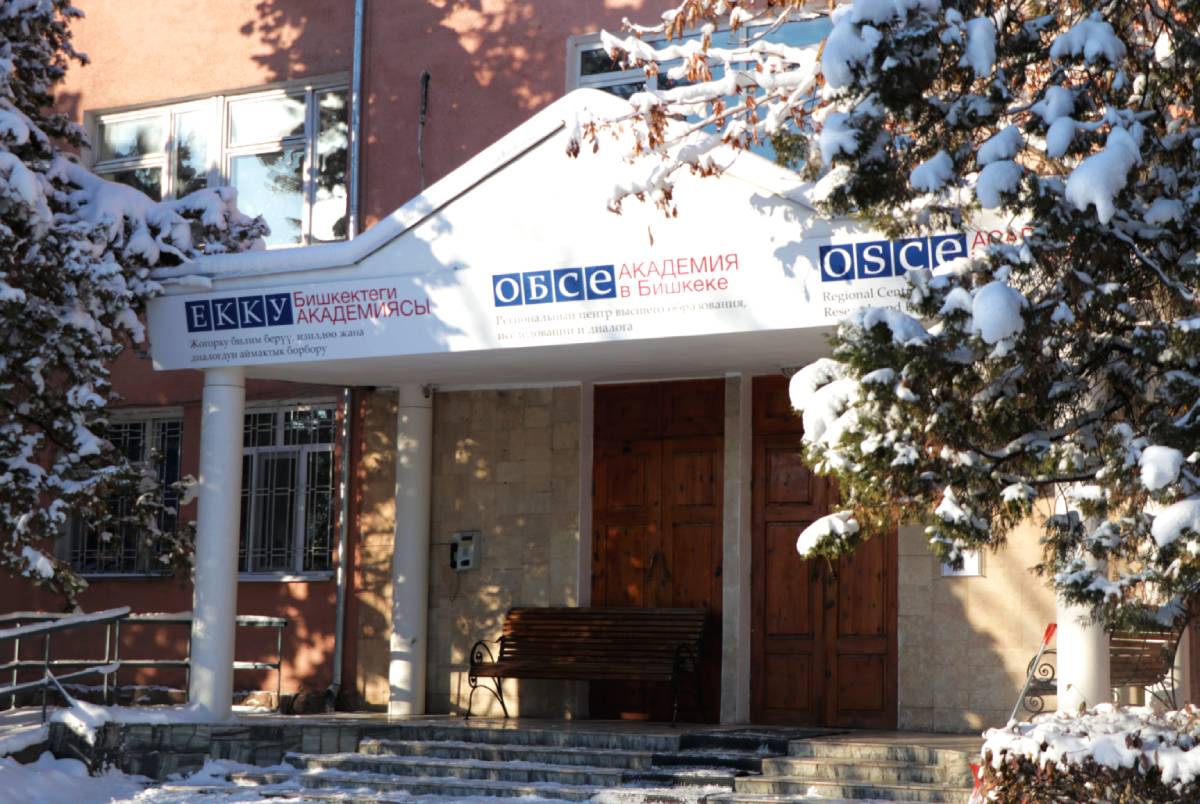
In 2018, the German Foreign Academic Exchange Service and MFA appointed me DAAD Associate Professor at the OSCE Academy in Bishkek for a five-year term under the ‚Science Diplomate‘ scheme. I taught International Human Rights Law, Governance and Democracy Theories and Concepts, Transitional Justice, Transitology, and Public Policy at the MA level.
After my assignment, I remained as Academic Director of the MAHRS programme for Human Rights and Sustainability in Central Asia since 2023.
Visiting Professor
&
Lectureships
Over the past twenty years, I have held visiting professorships on European Integration, International Human Rights Law, Public Policy, Transitional Justice and International Relations at the following Universities:
* Humboldt University in Berlin, Germany
* Universidad del Pais Vasco, Spain;
* University of Magdeburg in Germany;
* Beida University in Beijing, China;
* The Netherlands Institute of Human Rights at Utrecht University;
* Columbia University, SIPA, in New York, USA;
* Willy Brandt School for Public Policy at Erfurt University in Germany;
* The Management University of Singapore;* Hebrew University in Jerusalem, Israel;
* OSCE Academy in Bishkek, Kyrgyzstan.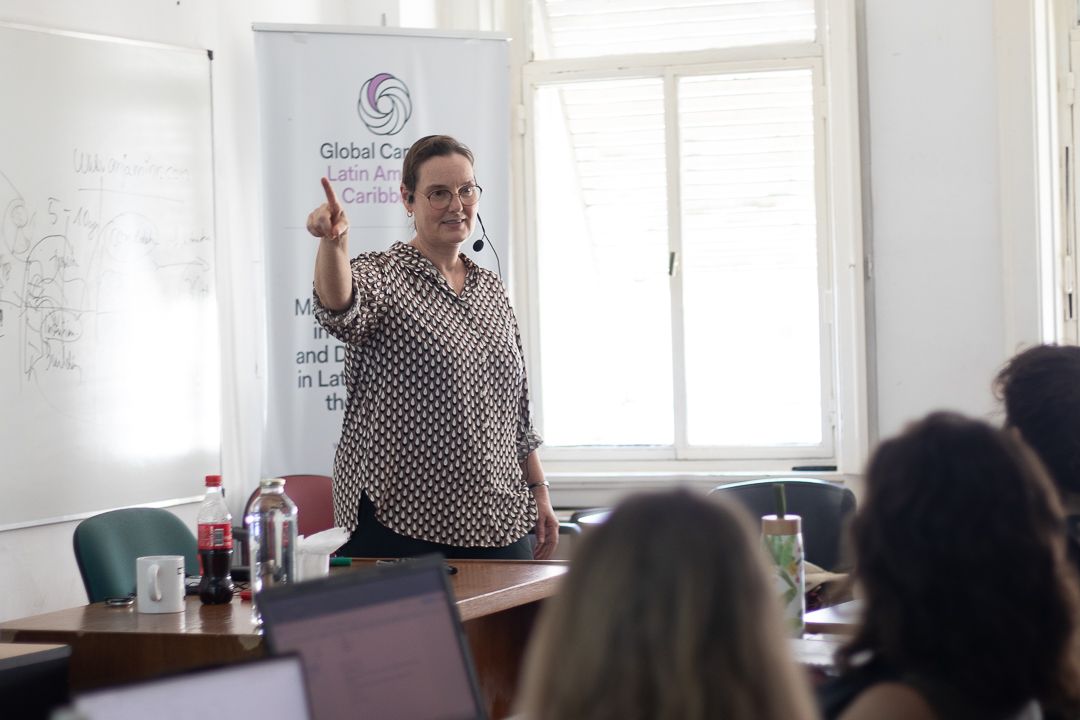 (copyright: LATMA, 2025)
For the Global Campus of Human Rights, I regularly teach courses on Transitology at Yerevan State University in Armenia (CES), St. Joseph University in Beirut, Lebanon (ArMA), The EMA Programme in Venice, and St. Martin University in Buenos Aires, Argentina (LATMA).